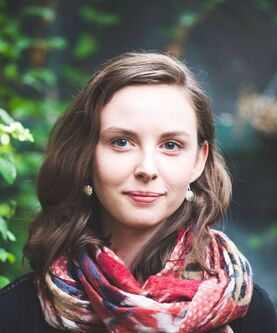
Rachael is a fifth-year Ph.D. candidate in the Department of Ecology, Evolution, and Behavior. She is a recipient of the 3M Science & Technology Fellowship, Charles Peter Sigerfoos Fellowship, and National Science Foundation Graduate Research Fellowship. Her research examines how environmental conditions influence animal behavior and the neural mechanisms underlying cognition, with a focus on visual and camouflage abilities of cephalopods and their role in marine ecosystems. She has research experience across the fields of animal behavior, cancer immunology, and environmental science, which has received media attention and several awards. She earned her BA magna cum laude from the University of Colorado Boulder, where she double-majored in Ecology & Evolutionary Biology, Environmental Studies, and minored in Atmospheric & Oceanic Sciences.
Rachael is passionate about education and outreach centered on one of the world’s most critical and unique habitats—coral reefs. As Graduate Instructor for Coral Reef Ecology (BIOL 4591), she designs active learning strategies to help students build meaningful connections to marine ecosystems. She also co-leads the study abroad course Diving Into Coral Reef Ecology (BIOL 4596) with Dr. Ray Newman, providing students with hands-on fieldwork and SCUBA diving experience on the reefs of Roatan, Honduras. Additionally, she advises the UMN Marine Biology Club, helping lead student engagement and coordinating outreach across the Twin Cities, including K–8 school visits with a traveling invertebrate Touch Tank and shoreline SCUBA clean-ups.
Outside the lab and field, Rachael enjoys traveling, scuba diving, hiking, gardening, photography, and art—often with her husband and their two big, fluffy dogs.
Current project: Rachael is using a neuroecological framework to identify the Hummingbird bobtail squid's (Euprymna berryi) neurosensory pathways involved in predator-prey interactions within coral reef food webs. She aims to understand their visual processes and the neural circuits behind camouflage. To address the complex nature of neuroecology, her research adopts an interdisciplinary approach, utilizing immunohistochemistry experiments, various behavioral assays, and computational modeling. She plans to collaborate with engineers interested in artificial intelligence and bioinspired materials, and ultimately, she hopes to engage with stakeholders and the public so her research can help manage marine ecosystems.
Research interests: behavior, neuroecology, marine, data science
Selected Publications:
Dickinson KL, Monaghan AJ, Rivera IJ, Hu L, Kanyomse E, Alirigia R, Adoctor J, Kaspar RE, Oduro AR, Wiedinmyer C. (2016). Changing weather and climate in Northern Ghana: comparison of local perceptions with meteorological and land cover data. Regional Environmental Change 17: 915–928. DOI: 10.1007/s10113-016-1082-4
Kaspar RE, Cook CN, Breed MD. (2018). Experienced individuals influence the thermoregulatory fanning behaviour in honey bee colonies. Animal Behaviour 142: 69–76. DOI: 10.1016/j.anbehav.2018.06.004
Johnson AM, Bullock BL, Neuwelt AJ, Poczobutt JM, Kaspar RE, Li HY, Kwak JW, Hopp K, Weiser-Evans MCM, Heasley LE, Schenk EL, Clambey ET, Nemenoff RA. (2020). Cancer cell-intrinsic expression of MHCII regulates the immune microenvironment and response to anti-PD1-1 therapy in lung adenocarcinoma. The Journal of Immunology 204: 2295–2307. DOI: 10.4049/jimmunol.1900778
Selected Media & OutreachNews from the College of Biological Sciences, Saint Paul, MN
Video: Of bobtails and breakthroughs with the Wardill Lab
Interviewer: Adara Taylor
Link: https://youtu.be/av4pd_ZDqzA?si=qaY-bCwrgiAQG4jh
Web Article: Fact and Fashion
Interviewer: Adara Taylor
Link: https://cbs.umn.edu/blog-posts/fact-and-fashion
WCCO CBS News Minnesota
Television Show: Divers to clean up St. Paul’s Lake Phalen for Earth Week
Interviewer: Pauleen Le
Link: https://www.cbsnews.com/minnesota/news/lake-phalen-clean-up-st-paul-earth-week/
Utah Public Radio (UPR), Utah State University, UT
Radio Interview: Episode 9: The Bee Biologist and The Behavioral Neuroscientist
Interview: Matthew LaPlante
Link: https://www.upr.org/post/undisciplined-bee-biologist-and-behavioral-neuroscientist
Rachael is passionate about education and outreach centered on one of the world’s most critical and unique habitats—coral reefs. As Graduate Instructor for Coral Reef Ecology (BIOL 4591), she designs active learning strategies to help students build meaningful connections to marine ecosystems. She also co-leads the study abroad course Diving Into Coral Reef Ecology (BIOL 4596) with Dr. Ray Newman, providing students with hands-on fieldwork and SCUBA diving experience on the reefs of Roatan, Honduras. Additionally, she advises the UMN Marine Biology Club, helping lead student engagement and coordinating outreach across the Twin Cities, including K–8 school visits with a traveling invertebrate Touch Tank and shoreline SCUBA clean-ups.
Outside the lab and field, Rachael enjoys traveling, scuba diving, hiking, gardening, photography, and art—often with her husband and their two big, fluffy dogs.
Current project: Rachael is using a neuroecological framework to identify the Hummingbird bobtail squid's (Euprymna berryi) neurosensory pathways involved in predator-prey interactions within coral reef food webs. She aims to understand their visual processes and the neural circuits behind camouflage. To address the complex nature of neuroecology, her research adopts an interdisciplinary approach, utilizing immunohistochemistry experiments, various behavioral assays, and computational modeling. She plans to collaborate with engineers interested in artificial intelligence and bioinspired materials, and ultimately, she hopes to engage with stakeholders and the public so her research can help manage marine ecosystems.
Research interests: behavior, neuroecology, marine, data science
Selected Publications:
Dickinson KL, Monaghan AJ, Rivera IJ, Hu L, Kanyomse E, Alirigia R, Adoctor J, Kaspar RE, Oduro AR, Wiedinmyer C. (2016). Changing weather and climate in Northern Ghana: comparison of local perceptions with meteorological and land cover data. Regional Environmental Change 17: 915–928. DOI: 10.1007/s10113-016-1082-4
Kaspar RE, Cook CN, Breed MD. (2018). Experienced individuals influence the thermoregulatory fanning behaviour in honey bee colonies. Animal Behaviour 142: 69–76. DOI: 10.1016/j.anbehav.2018.06.004
Johnson AM, Bullock BL, Neuwelt AJ, Poczobutt JM, Kaspar RE, Li HY, Kwak JW, Hopp K, Weiser-Evans MCM, Heasley LE, Schenk EL, Clambey ET, Nemenoff RA. (2020). Cancer cell-intrinsic expression of MHCII regulates the immune microenvironment and response to anti-PD1-1 therapy in lung adenocarcinoma. The Journal of Immunology 204: 2295–2307. DOI: 10.4049/jimmunol.1900778
Selected Media & OutreachNews from the College of Biological Sciences, Saint Paul, MN
Video: Of bobtails and breakthroughs with the Wardill Lab
Interviewer: Adara Taylor
Link: https://youtu.be/av4pd_ZDqzA?si=qaY-bCwrgiAQG4jh
Web Article: Fact and Fashion
Interviewer: Adara Taylor
Link: https://cbs.umn.edu/blog-posts/fact-and-fashion
WCCO CBS News Minnesota
Television Show: Divers to clean up St. Paul’s Lake Phalen for Earth Week
Interviewer: Pauleen Le
Link: https://www.cbsnews.com/minnesota/news/lake-phalen-clean-up-st-paul-earth-week/
Utah Public Radio (UPR), Utah State University, UT
Radio Interview: Episode 9: The Bee Biologist and The Behavioral Neuroscientist
Interview: Matthew LaPlante
Link: https://www.upr.org/post/undisciplined-bee-biologist-and-behavioral-neuroscientist